
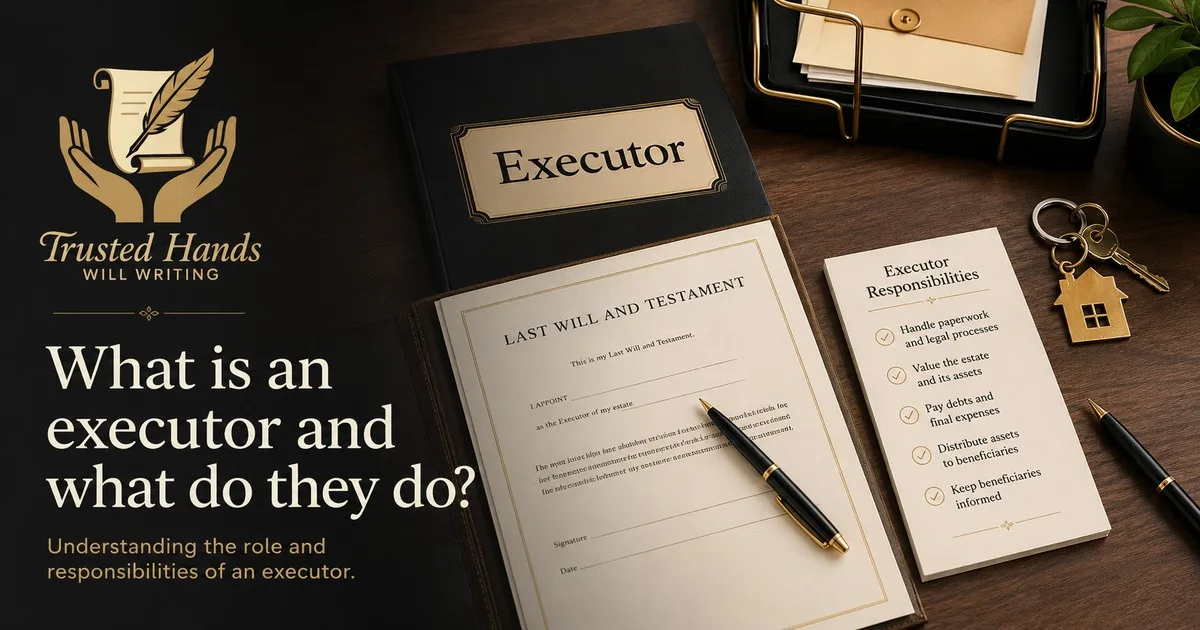
Most people, when they choose an executor, choose a person they trust completely - a sibling, a child, a close friend. They rarely sit that person down and explain what the job actually involves. So when the time comes, the executor is left holding a role they accepted in principle a decade ago, with no idea where to begin.
This article is what any will-owner should give their executors today: a plain-English list of what they will need to know, and what you can do now to make their job manageable.
What an executor is, in two sentences
An executor is the person legally responsible for carrying out the wishes in a will. They collect in the assets, pay the debts and any tax owed, and distribute what's left to the beneficiaries according to the will.
That sounds simple. The administrative work behind it is not.
The five things every executor needs to know
If they don't know all of these, they're starting cold.
1. That they are the executor
Astonishingly often, executors find out at the funeral. By then they've already missed weeks of decisions. The Executor Notification Service at Trusted Hands solves this directly: each executor is emailed the moment you appoint them, with a clear (calm) explanation of the role.
2. Where to find the will
The original signed will needs to be physically produced for probate. If it's in a drawer no-one can find, the estate is administered as if no will exists. The Family Vault keeps the will in encrypted UK storage with a clear executor-access path.
3. What documents accompany the will
A will doesn't list your insurance providers, your bank, your pension funds, your subscriptions, or your funeral wishes. These need to be findable separately. The Family Vault is built for exactly this: seven categories, organised, ready to share.
4. What the first 7 days look like
The early days after a death are time-pressured. The Executor Pack - included free with every Trusted Hands will and visible to executors in the portal - covers exactly what to do, in what order. Registering the death. Securing the home. Notifying providers. Working out whether probate is needed.
5. Where to ask questions
An executor isn't expected to know probate or inheritance tax. They are expected to know when to ask a solicitor for help. The Executor Pack flags exactly when professional advice is worth the cost.
What you can do today to make their life easier
Five small actions, each takes minutes:
1. Tell each executor in person that they are an executor. Don't surprise them with a posthumous letter.
2. Tell them where the will is kept. If you're using Trusted Hands, the executor portal handles this for you - they'll know exactly where to log in when the time comes.
3. Write a one-page "where to find things" note. A list: bank, mortgage provider, pension(s), life insurance provider, accountant, solicitor (if any), where the deeds are, who has spare keys. Add it to your Family Vault.
4. Make sure your funeral wishes are recorded. Not as binding instructions (they aren't legally enforceable), but so your family doesn't have to guess.
5. Keep your will updated. A will from 2014 may name executors who have since moved abroad, fallen out, or died. The update flow at Trusted Hands lets you re-issue with a few clicks.
What executors most commonly forget
In the early days, executors typically overlook:
- The death certificate. They'll need multiple original copies - certified copies aren't enough for every provider. Get 10.
- The bond. In some cases a probate bond is needed before the grant is issued.
- Insurance on the property. Empty-home cover is different from standard buildings insurance. Notify the insurer.
- Stopping subscriptions. Streaming, software, gym, charity direct debits keep going until cancelled.
- Securing the home. Locks changed. Mail collected. Visible valuables removed.
A pre-organised Family Vault gives them a head start on each of these.
What executors need that they often don't know to ask for
Beyond paperwork, executors benefit hugely from:
- A clear list of beneficiaries with current contact details. Outdated addresses cause weeks of delay.
- Knowledge of any digital assets. Photos, music, social media, cryptocurrency. We cover this in digital legacy planning.
- Awareness of any specific gifts. "Aunt Mary gets my jewellery box" is hard to fulfil if no-one knows which box, or where it is, or who Aunt Mary's current address is.
- An idea of the estate's tax position. Whether inheritance tax is likely to apply changes the urgency and the order of operations.
Frequently asked questions
Does my executor have to be a solicitor?
No. Executors can be anyone you trust who is over 18 and not bankrupt. They can hire a solicitor for the legal parts if they choose; the cost comes out of the estate.
Can I appoint more than one executor?
Yes - up to four can act jointly in England and Wales. Co-executors share the work and act as a check on each other. The Trusted Hands portal gives all of them the same access and the same checklist.
What if my chosen executor refuses when the time comes?
They can renounce probate before they've taken any executor action. Your named substitute then steps up. The Executor Pack walks them through the formal process.
What if I haven't told my executor and I die suddenly?
The will is still valid. The executor will be informed by whoever discovers the will - usually a family member or solicitor. They can accept or renounce the role. The Executor Notification Service exists to remove this awkwardness entirely.
Give your executors a head start.
A Trusted Hands will doesn't just appoint executors - it tells them, prepares them, and gives them a clear path when the moment comes.
- Build your will online from £49
- Executors notified automatically via the Executor Notification Service
- The Executor Pack included free - a plain-English guide for the people you trust
- Add the Family Vault so executors find the documents, not just the will